

Ceiling Water Damage in Idaho Falls, ID
Idaho Falls homes built on deep foundations face unique ceiling water damage risks during spring snowmelt and freeze-thaw cycles, when rapid temperature swings and seasonal runoff can force water upward through walls and into overhead spaces. Ceiling damage often goes unnoticed until staining or sagging appears, making fast assessment and water removal critical to prevent structural compromise and secondary issues. Calhoun Water Damage Restoration connects Idaho Falls property owners with independent local restoration providers who respond quickly to locate and address ceiling water damage before it spreads.
Ceiling Water Damage in Idaho Falls: Local Risks & Fast Help
Idaho Falls property owners face a particular ceiling water damage threat each spring, when rapid snowmelt and sharp temperature swings stress roofing systems, gutters, and the upper-level infrastructure of homes throughout the region. Freeze-thaw cycles that grip the area during winter can also compromise pipes and seals in attics and upper walls, leading to slow leaks that eventually soak into ceilings and create visible stains, soft spots, and structural concerns. Once water penetrates a ceiling, the damage spreads quickly—moisture wicks into insulation, drywall, and framing, creating conditions that worsen by the hour. Homeowners in neighborhoods like Sunnyside and Woodland Hills often discover ceiling damage only after significant water has already accumulated, making early detection and rapid response essential.
Calhoun Water Damage Restoration connects Idaho Falls property owners with local independent restoration providers who specialize in identifying and addressing ceiling water damage at its source. These providers inspect not only the visible wet area but also trace water back to its entry point—whether a roof leak, ruptured pipe, or failed flashing—and work to stop the flow while carefully documenting damage for insurance purposes. They remove saturated materials, dry affected framing and insulation, and monitor conditions to prevent secondary issues like mold growth. When ceiling water damage strikes, quick action makes the difference; contacting a local provider through Calhoun puts experienced restoration resources in your corner without delay.
Why Idaho Falls Property Owners Choose Calhoun for Ceiling Water Damage
Fast Response to Ceiling Water Damage
Ceiling water damage demands immediate action to prevent structural harm and mold growth. Calhoun connects you with local restoration providers who prioritize rapid response, arriving quickly to assess and begin mitigation work before damage spreads.
Thorough Ceiling Water Damage Assessment
Hidden moisture behind drywall and within ceiling cavities can worsen over time. The independent providers in our network conduct comprehensive inspections to identify all affected areas and develop targeted treatment plans for complete ceiling water damage restoration.
Clear Communication Throughout Ceiling Repair
Water damage restoration involves multiple steps—extraction, drying, and repair. Calhoun's network providers keep you informed at every stage, explaining findings and next steps so you understand how ceiling water damage is being addressed.
Prepared for Seasonal Freeze-Thaw Ceiling Risks
Idaho Falls winters bring rapid temperature swings and spring snowmelt that stress plumbing and roofs. When freeze-related pipe bursts or melting snow seep into ceilings, Calhoun connects you with providers experienced in addressing these seasonal ceiling water damage emergencies common to the region.
How Our Ceiling Water Damage Process Works
From your initial call to the final inspection, we provide a structured, professional, and efficient process to ensure your property is fully restored after Ceiling Water Damage.
Report Your Ceiling Water Damage
Contact Calhoun Water Damage Restoration to describe ceiling water damage affecting your Idaho Falls property. We connect you with a local independent restoration provider who can assess the damage and discuss next steps right away.
Assess Ceiling Damage & Source
The local provider you're connected with inspects the affected ceiling to identify whether damage stems from roof leaks, pipe bursts related to freeze cycles, or snowmelt intrusion—common causes in Idaho Falls homes built on deep foundations. They'll document the scope and recommend restoration steps.
Restore & Dry Your Ceiling
The independent provider removes damaged ceiling materials, dries the affected area, and coordinates repairs or replacement to restore your ceiling. They'll work with your insurance if needed and answer questions about preventing similar ceiling water damage in the future.
Dealing with Ceiling Water Damage in Idaho Falls? Get fast, professional help.
Call Now — (208) 886-1553Ceiling Water Damage Across Idaho Falls
Idaho Falls homes built on basements or crawl spaces face unique seasonal pressures that directly affect ceiling integrity. Spring snowmelt runoff—combined with the region's rapid temperature swings between winter and thaw—creates elevated moisture conditions in foundations and crawl spaces that rise upward through framing and into upper floors. When water begins migrating vertically through walls and structural cavities, ceiling drywall and insulation are often the first interior surfaces to show staining, sagging, or soft spots. Winter freeze-thaw cycles can also stress pipe connections and older plumbing, increasing the risk of leaks that pool above attic spaces before breaking through to visible ceilings below.
Neighborhoods like Sunnyside and Woodland Hills, with a mix of mid-range and established homes, commonly report ceiling water damage tied to these seasonal patterns. The longer water sits between the roof line and the finished ceiling surface—whether from slow seepage or a sudden pipe rupture—the more damage spreads to framing, insulation, and paint. Early detection and rapid extraction by local restoration providers prevent mold growth and structural compromise. If you notice water stains, discoloration, or soft spots on your ceiling, connecting with a local provider quickly can limit repair scope and costs.
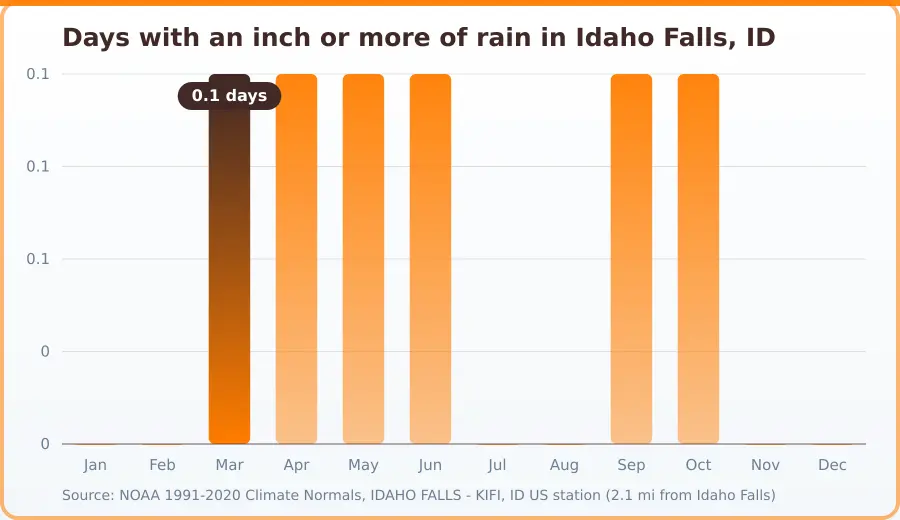
| Period | Days with an inch or more of rain (days) |
|---|---|
| Jan | 0 |
| Feb | 0 |
| Mar | 0.1 |
| Apr | 0.1 |
| May | 0.1 |
| Jun | 0.1 |
| Jul | 0 |
| Aug | 0 |
| Sep | 0.1 |
| Oct | 0.1 |
| Nov | 0 |
| Dec | 0 |
Source: NOAA 1991-2020 Climate Normals, IDAHO FALLS - KIFI, ID US station (2.1 mi from Idaho Falls). Retrieved October 4, 2026.
Seasonal Ceiling Water Damage Risks in Idaho Falls
Spring: Snowmelt Saturation
As temperatures rise and snow melts rapidly, ceiling water damage becomes visible in properties with basements and crawl spaces—water seeping through foundation walls, then up into overhead structures. Calhoun connects you with local restoration providers who identify and extract water before it spreads into insulation, drywall, and structural framing.
Summer: Heat and Humidity
Summer thunderstorms and occasional heavy rainfall can overwhelm roof systems and gutters, pushing water into attic spaces and ceilings. High humidity slows evaporation and accelerates mold development in wet ceiling cavities. Local providers reached through Calhoun respond quickly to extract moisture and begin drying before secondary damage compounds.
Fall: Debris and Blockages
Falling leaves clog gutters and roof valleys, forcing water to pool and back up under shingles and into ceiling spaces—a common precursor to interior water damage. Calhoun connects property owners with providers who assess hidden ceiling saturation and begin water removal before freeze-thaw cycles crack damp materials.
Winter: Freeze-Related Failures
Frozen or burst supply lines above ceilings discharge water directly into drywall, insulation, and framing. Rapid temperature swings cause pipes to fail unexpectedly, leaving ceiling cavities saturated. Calhoun's network of local restoration providers responds to emergency pipe-burst water damage in Idaho Falls homes, working to stop the flow and extract standing water from overhead structures.
Ceiling Water Damage FAQs — Idaho Falls, ID
Ceiling water damage occurs when water penetrates through roof leaks, burst pipes, or upper-floor plumbing and pools in or soaks through the drywall, insulation, and structural materials above your head. You may notice discoloration, soft spots, peeling paint, or sagging. The local providers Calhoun connects you with will assess the source, extent of moisture, and structural impact before beginning water removal and drying.
Calhoun Water Damage Restoration works to connect you with independent local restoration providers in Idaho Falls quickly, especially for active water emergencies. Response speed depends on the provider's current workload and your location within the area. Contact Calhoun immediately when you discover ceiling water damage so a local provider can assess and begin work without delay.
Ceiling water damage repair costs depend on the affected area's size, water source, structural materials involved, whether insulation or framing needs replacement, and how long moisture has been present. The independent provider Calhoun connects you with will inspect your ceiling, identify the water source, and provide pricing based on the specific scope of work required for your property.
During restoration, the local provider will locate and stop the water source, remove saturated drywall or insulation, use specialized equipment to dry the cavity and framing, monitor moisture levels, and once dry, prepare the area for repairs or replacement. The process requires ventilation, dehumidification, and sometimes multiple visits to ensure no hidden moisture remains trapped inside the ceiling.
Regularly inspect your roof for missing or damaged shingles, keep gutters and downspouts clear, and have plumbing and upper-floor connections checked annually. In Idaho Falls, seasonal temperature changes and freeze-thaw cycles can stress pipes and roofing, so winterization of exposed plumbing and roof maintenance before cold weather are key steps to protect your ceilings year-round.
Ceiling water damage risk peaks in spring when snowmelt runoff and rapid temperature swings stress roofing and plumbing systems in Idaho Falls homes. Winter freeze cycles can also cause pipe bursts that lead to ceiling damage from above. Year-round vigilance—especially after heavy snow, thaw periods, or pipe exposure to cold—helps catch leaks before water reaches your ceilings.
Homeowner Safety Toolkit
Verify Your Idaho Falls, ID Water Damage Restoration Company
Before you hire anyone, use these independent national resources to confirm credentials, standards, and track record.
IICRC
Sets the technical standards for water damage restoration. Confirm a company's technicians hold real, current IICRC certification before you hire them.
Verify CertificationEPA
The federal government's own guidance on drying out a water-damaged home fast enough to keep mold from taking hold.
Mold Prevention GuideRIA
A national trade association whose member companies agree to a written code of ethics covering honest estimates, safety, and fair billing.
Code of EthicsDealing with Ceiling Water Damage in Idaho Falls, ID? Call (208) 886-1553 for 24/7 help.
Call Now — (208) 886-1553Areas We Serve Near Idaho Falls, Idaho
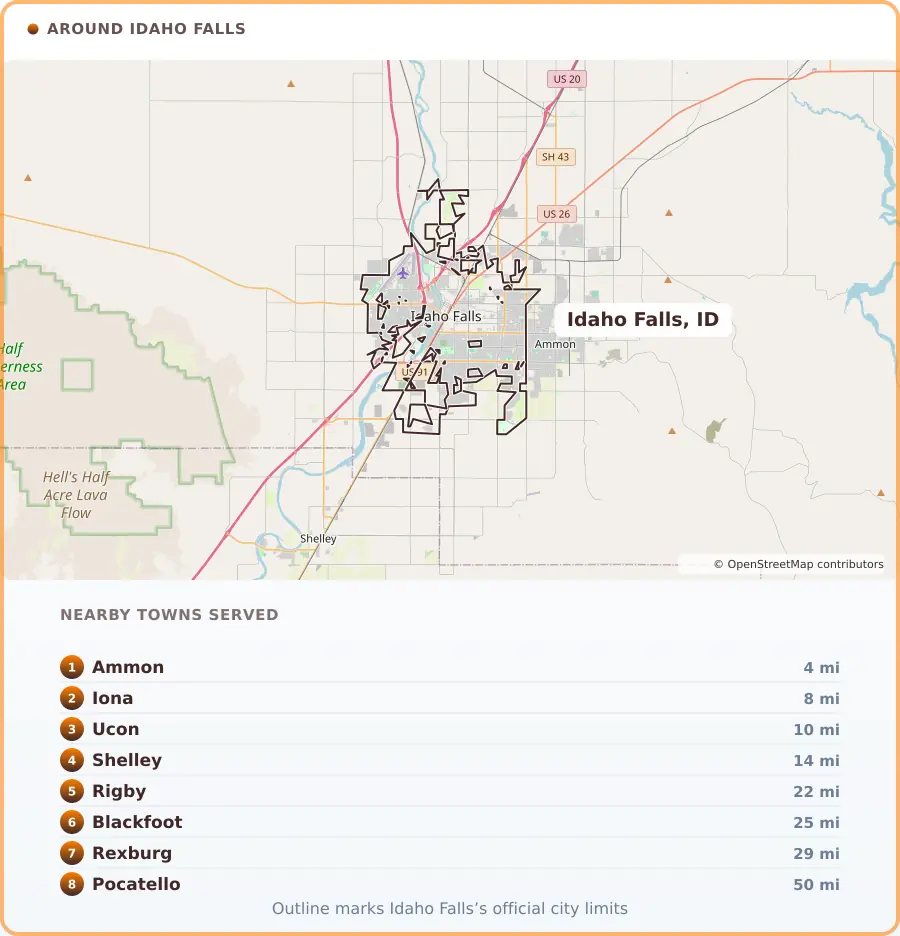
Based in Idaho Falls, ID, with 8 nearby communities inside the service area — near enough to reach quickly, not just listed on a map.
Idaho Falls, ID Information
Set along the Snake River in eastern Idaho, Idaho Falls is home to roughly 66,000 people and serves as the region's anchor city. Its economy runs on brainpower as much as farmland: Idaho National Laboratory and Battelle Energy Alliance make it a national center for nuclear research and energy, while companies like Melaleuca and REC Silicon add manufacturing muscle alongside strong healthcare and agricultural sectors rooted in the surrounding farm country.
It's also a city that works as a crossroads — a retail and education hub for eastern ID, with Idaho State University's local campus and a steady flow of visitors heading toward Yellowstone and the Tetons. Neighborhoods like Snake River Landing and Downtown Idaho Falls reflect that mix of industry, community, and outdoor-minded living.

Photo: Billy Hathorn, CC BY-SA 3.0