

Water Mitigation in Idaho Falls, ID
Idaho Falls homes built on basements and crawl spaces face concentrated water-damage risk during spring snowmelt and temperature fluctuations that drive water infiltration and occasional freeze-related pipe failures. Water mitigation—the immediate steps to stop active water entry, remove standing water, and begin drying before secondary damage spreads—is critical to prevent structural deterioration and mold growth in these foundation types. Calhoun Water Damage Restoration connects Idaho Falls property owners with independent local restoration providers who respond quickly to active water emergencies, helping protect your home's foundation and contents when time matters most.
Water Mitigation Services for Idaho Falls Homes
Idaho Falls property owners face a distinctive seasonal water threat tied to the region's freeze-thaw cycles and spring snowmelt patterns. When temperatures swing dramatically between winter cold and warming spring days, the rapid runoff from melting snow can overwhelm drainage systems, saturate foundations, and seep into basements and crawl spaces where most local homes are built deep to reach below the frost line. Burst pipes triggered by winter freezes add another layer of urgency. Water intrusion at any scale demands swift mitigation—the process of stopping active water entry, removing standing water, and beginning controlled drying before structural damage, mold growth, and hidden deterioration take hold. Early mitigation is the difference between a contained incident and weeks of secondary problems.
Calhoun Water Damage Restoration connects Idaho Falls property owners with independent local restoration providers who specialize in water mitigation as their core response. When you contact the service, you're matched with providers operating right here in Idaho Falls who understand the region's seasonal risks and can dispatch quickly to assess the scope of water intrusion, extract standing water, deploy industrial drying equipment, and monitor moisture levels until your property is stabilized. The focus remains on mitigation—halting the water damage process itself—so that further restoration work can follow on a solid foundation. If you're facing active water damage, reaching out to discuss your specific situation puts you in direct contact with local expertise ready to respond.
Why Idaho Falls Property Owners Choose Calhoun Water Mitigation
Fast Water Mitigation Response
Water mitigation demands speed. Calhoun connects you with local providers ready to assess and begin mitigation work quickly, limiting damage spread and protecting your property's structure and contents.
Thorough Water Mitigation Treatment
Effective water mitigation requires systematic extraction, drying, and moisture monitoring. The independent providers in our network apply comprehensive mitigation protocols to address visible water and hidden moisture in walls, floors, and foundations.
Clear Water Mitigation Communication
Understanding what water mitigation involves and what happens next reduces stress. Calhoun's local providers explain mitigation steps, timelines, and next actions in straightforward terms so you stay informed throughout the process.
Water Mitigation for Seasonal Thaw Risks
Idaho Falls' cycle of winter freeze and spring thaw creates seasonal water risks, including rapid snowmelt runoff and occasional pipe-burst damage from temperature swings. Homes with basements or crawl spaces are especially vulnerable during these transitions.
Calhoun connects property owners with local water mitigation providers experienced in addressing springtime moisture challenges and freeze-related water emergencies common to the region, helping protect foundations and living spaces.
How Our Water Mitigation Process Works
From your initial call to the final inspection, we provide a structured, professional, and efficient process to ensure your property is fully restored after Water Mitigation.
Contact a Local Water Mitigation Provider
Call Calhoun Water Damage Restoration to connect with an independent water mitigation specialist serving Idaho Falls. We'll match you with a local provider ready to assess your property and begin limiting water damage immediately.
Receive Your Water Mitigation Assessment
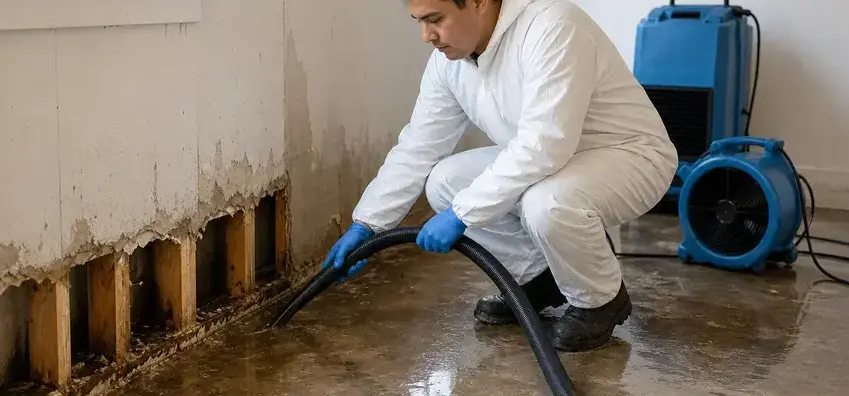
The provider inspects your home to identify water intrusion points, moisture accumulation in basements or crawl spaces, and active water damage. This evaluation determines what water mitigation steps—extraction, drying, dehumidification—your property needs to prevent further deterioration.
Execute Water Mitigation and Monitor Drying
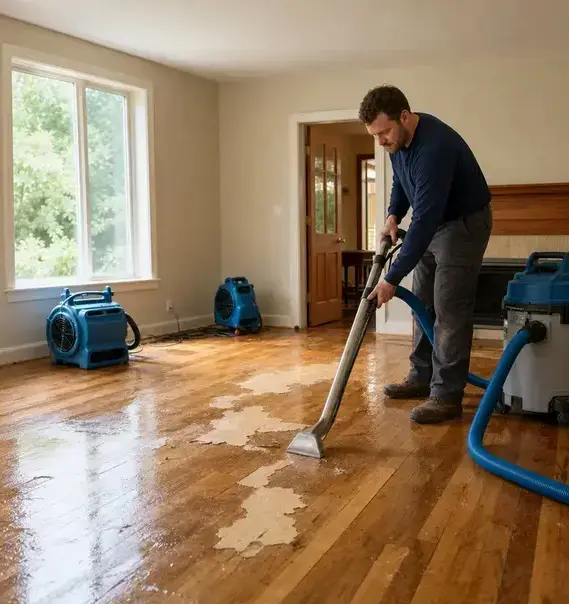
The provider removes standing water, sets up drying equipment, and monitors moisture levels throughout your property until water damage stabilizes. Follow-up visits confirm that water mitigation is complete and your home is ready for any necessary repairs.
Dealing with Water Mitigation in Idaho Falls? Get fast, professional help.
Call Now — (208) 886-1553Water Mitigation Needs Across Idaho Falls
Idaho Falls' climate presents unique water mitigation challenges tied to the region's freeze-thaw cycles and snowmelt patterns. Most homes here are built with basements or crawl spaces—a necessity given the area's cold winters and the deep frost line that requires foundations set well below ground. This construction style, while essential for winter protection, creates a specific vulnerability: when spring temperatures rise rapidly and snow accumulates throughout the season, runoff and ground saturation can overwhelm foundation drainage systems. Coupled with the occasional winter pipe burst from sudden cold snaps, basements and crawl spaces in neighborhoods like Sunnyside and Woodland Hills face recurring water intrusion risks that demand prompt, local mitigation response.
Water mitigation in Idaho Falls isn't just about removing standing water—it's about acting quickly during the seasonal windows when snowmelt and temperature swings create the greatest pressure on below-ground spaces. The faster water is identified and addressed, the better the chances of preventing structural damage, mold development, and costly long-term deterioration. Calhoun Water Damage Restoration connects Idaho Falls property owners with independent local restoration providers who understand these seasonal patterns and can respond immediately when water emergencies strike.
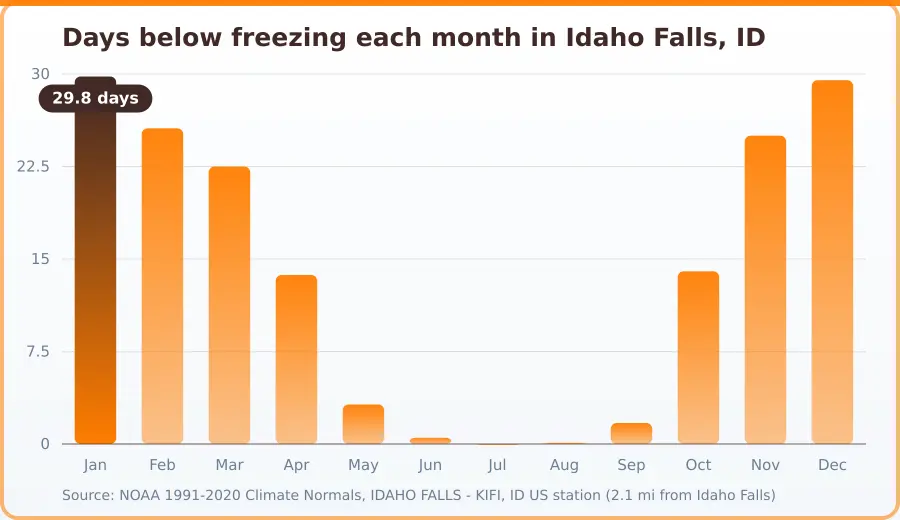
| Period | Freezing days per month (days) |
|---|---|
| Jan | 29.8 |
| Feb | 25.6 |
| Mar | 22.5 |
| Apr | 13.7 |
| May | 3.2 |
| Jun | 0.5 |
| Jul | 0 |
| Aug | 0.1 |
| Sep | 1.7 |
| Oct | 14 |
| Nov | 25 |
| Dec | 29.5 |
Source: NOAA 1991-2020 Climate Normals, IDAHO FALLS - KIFI, ID US station (2.1 mi from Idaho Falls). Retrieved October 4, 2026.
Year-Round Water Mitigation Needs in Idaho Falls
Spring: Snowmelt Runoff
Rapid spring thaw and seasonal temperature fluctuations create significant water mitigation challenges as snowmelt runoff overwhelms drainage systems and saturates soil around foundations. Homes built on basements face heightened risk during this transition. Calhoun connects property owners with local restoration providers ready to assess foundation moisture, manage groundwater intrusion, and prevent costly water damage before it spreads.
Summer: Heavy Rainfall
Summer thunderstorms bring intense precipitation that tests gutters, downspouts, and drainage capacity. Water mitigation becomes critical when heavy rain exceeds yard grading and surface runoff channels, potentially pooling near structures. Local restoration providers help identify vulnerable entry points, recommend drainage improvements, and respond quickly if water enters crawl spaces or basements following sudden storms.
Fall: Seasonal Transitions
Cooling temperatures and increased moisture as fall approaches create conditions where condensation and water seepage intensify. Water mitigation inspections become important before winter arrives, catching foundation cracks, window seals, and drainage issues while outdoor work is still practical. Calhoun's referral network links you with providers who can evaluate crawl-space moisture and prepare your property for the colder months ahead.
Winter: Freeze-Related Damage
Subfreezing temperatures bring the risk of frozen and burst pipes that discharge large volumes of water indoors. Water mitigation response during winter emergencies must be immediate to prevent structural damage and mold growth in confined spaces. Local restoration providers accessible through Calhoun address pipe breaks, extract standing water, and dry affected areas before cold extends damage further into your home.
Water Mitigation FAQs — Idaho Falls, ID
Water mitigation is the immediate action taken to stop ongoing water intrusion and limit damage after a leak, pipe burst, or water event. The process typically includes identifying the water source, removing standing water, drying affected areas and materials, and stabilizing the property to prevent secondary damage like mold growth. Local providers work to contain the problem and prepare your home for any necessary restoration that follows.
Water damage requires fast response. Calhoun Water Damage Restoration works to connect you with a local mitigation provider as soon as possible, since delaying action increases water spread and structural damage. When you contact us, we match you with an independent service provider in the Idaho Falls area ready to assess and begin mitigation work promptly.
Mitigation pricing depends on how much water is present, which areas are affected, how quickly you respond, and what materials need drying or removal. Homes in Idaho Falls with basements or crawl spaces may face different scope and costs based on foundation depth and water access. The independent provider you're connected with will evaluate your specific situation and explain costs before work begins.
Before mitigation begins, move personal belongings and furniture away from wet areas if safe to do so, turn off electrical power to affected rooms to reduce hazards, and open windows and doors to improve airflow. Avoid entering areas with standing water or sewage contamination. The mitigation provider will guide you on access to the property and any additional steps needed once they arrive.
Mitigation itself addresses immediate water events, but the provider may identify underlying causes—such as poor grading, foundation cracks, or drainage issues—that contribute to repeat problems. Addressing these root causes through proper maintenance and repairs helps reduce the risk of future water intrusion, especially important in Idaho Falls where seasonal temperature and moisture changes can stress foundations and plumbing systems.
Idaho Falls experiences rapid temperature shifts between seasons, and winter freeze-thaw cycles put strain on pipes and foundations, increasing the risk of leaks and bursts. Spring snowmelt also raises groundwater levels, putting additional pressure on basement and crawl space walls. Early mitigation response during these active seasons prevents water from spreading deeper into your home and causing costlier damage.
Homeowner Safety Toolkit
Verify Your Idaho Falls, ID Water Damage Restoration Company
Before you hire anyone, use these independent national resources to confirm credentials, standards, and track record.
IICRC
Sets the technical standards for water damage restoration. Confirm a company's technicians hold real, current IICRC certification before you hire them.
Verify CertificationEPA
The federal government's own guidance on drying out a water-damaged home fast enough to keep mold from taking hold.
Mold Prevention GuideRIA
A national trade association whose member companies agree to a written code of ethics covering honest estimates, safety, and fair billing.
Code of EthicsDealing with Water Mitigation in Idaho Falls, ID? Call (208) 886-1553 for 24/7 help.
Call Now — (208) 886-1553Areas We Serve Near Idaho Falls, Idaho
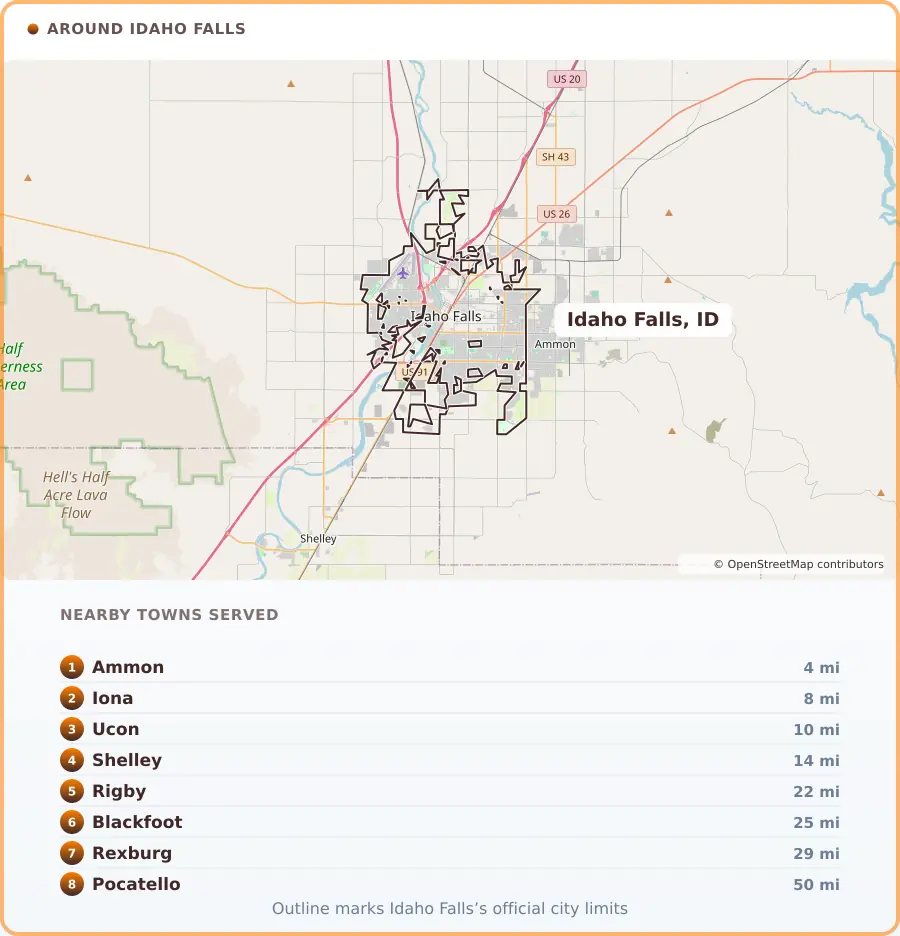
Based in Idaho Falls, ID, with 8 nearby communities inside the service area — near enough to reach quickly, not just listed on a map.
Idaho Falls, ID Information
Set along the Snake River in eastern Idaho, Idaho Falls is home to roughly 66,000 people and serves as the region's anchor city. Its economy runs on brainpower as much as farmland: Idaho National Laboratory and Battelle Energy Alliance make it a national center for nuclear research and energy, while companies like Melaleuca and REC Silicon add manufacturing muscle alongside strong healthcare and agricultural sectors rooted in the surrounding farm country.
It's also a city that works as a crossroads — a retail and education hub for eastern ID, with Idaho State University's local campus and a steady flow of visitors heading toward Yellowstone and the Tetons. Neighborhoods like Snake River Landing and Downtown Idaho Falls reflect that mix of industry, community, and outdoor-minded living.
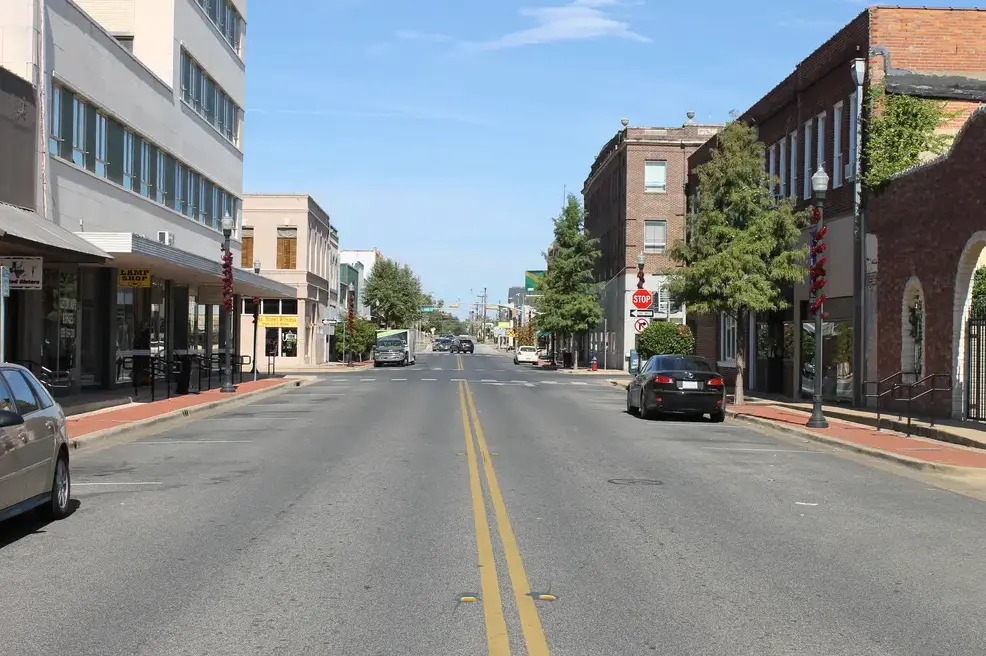
Photo: Billy Hathorn, CC BY-SA 3.0